
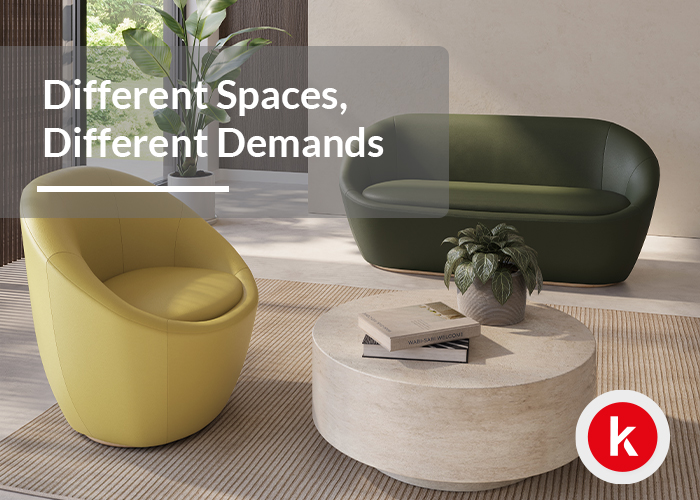
Different Spaces, Different Demands
Different Spaces, Different Demands
A single piece of furniture in a healthcare setting is rarely expected to do just one job. Move the same chair between different areas of an estate and the demands placed on it can change considerably, not because the chair itself is different, but because what it is being asked to support is.
Use and duration
How often a seat is used, and for how long, creates very different requirements. A seat used briefly by many different people throughout the day experiences a different kind of wear from one occupied by the same person for an extended period.
Frequency of use points towards robustness and ease of maintenance; duration of use points towards postural support, adjustability and sustained comfort. Neither is more important than the other. They are simply different challenges, and a chair designed with only one in mind may underperform where the other applies.
Movement and accessibility
Furniture also needs to account for how people move in, through and around a space. Some environments call for furniture that can be repositioned easily as the room’s use changes throughout the day. Others require furniture that gives people greater physical support when sitting down or standing up.
Armrest height, seat depth and stability can all affect how easily someone transfers independently or with assistance. Accessibility is not a single box to tick; requirements vary according to the room, the task and the people using it.
Cleaning and infection control
Cleaning regimes can vary considerably between different areas, and furniture needs to be specified accordingly. Some spaces require rapid, frequent cleaning between uses, while others call for less frequent but more thorough decontamination.
Seam placement, material choice and how easily surfaces can be accessed for cleaning all follow from these differing requirements. A detail that may appear purely aesthetic from a distance is often, on closer inspection, a hygiene decision.
Space planning and staff interaction
How furniture sits within a room matters just as much as the furniture itself. Sightlines, circulation space and the way staff need to interact with a piece, whether adjusting it, helping someone into or out of it, or simply moving around it while providing care, all influence what the right choice looks like for a particular space.
A chair that works well in an open, high-traffic area may not be suitable for a smaller, quieter room with a different pattern of staff interaction, and vice versa.
Patient comfort
Running through all of this is comfort, not as an afterthought once the practical requirements have been addressed, but as another factor that changes with context.
Comfort during a short wait is a very different design challenge from comfort during several hours spent in the same seat.
Designing for the difference, not around it
None of this points towards a single ideal specification for healthcare furniture. Quite the opposite. It highlights the value of understanding which demands matter most within each individual space, and designing around those needs rather than applying a general-purpose solution everywhere.
The most considered healthcare furniture is not the furniture that looks the same in every room. It is the furniture that has been thought through for each one.
Comments are closed here.