
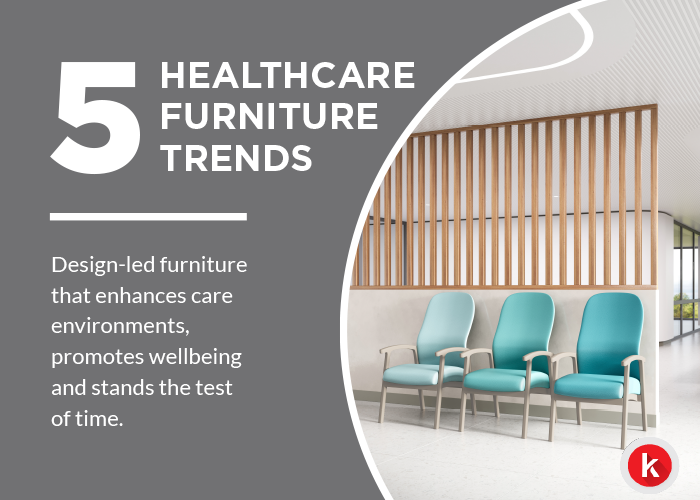
5 trends influencing healthcare furniture in 2026
Healthcare environments are evolving. Today’s spaces need to do more than meet functional requirements. They should promote wellbeing, support staff, and create a positive experience for patients and visitors alike.
Here are five trends we’re seeing shape healthcare interiors across the UK:
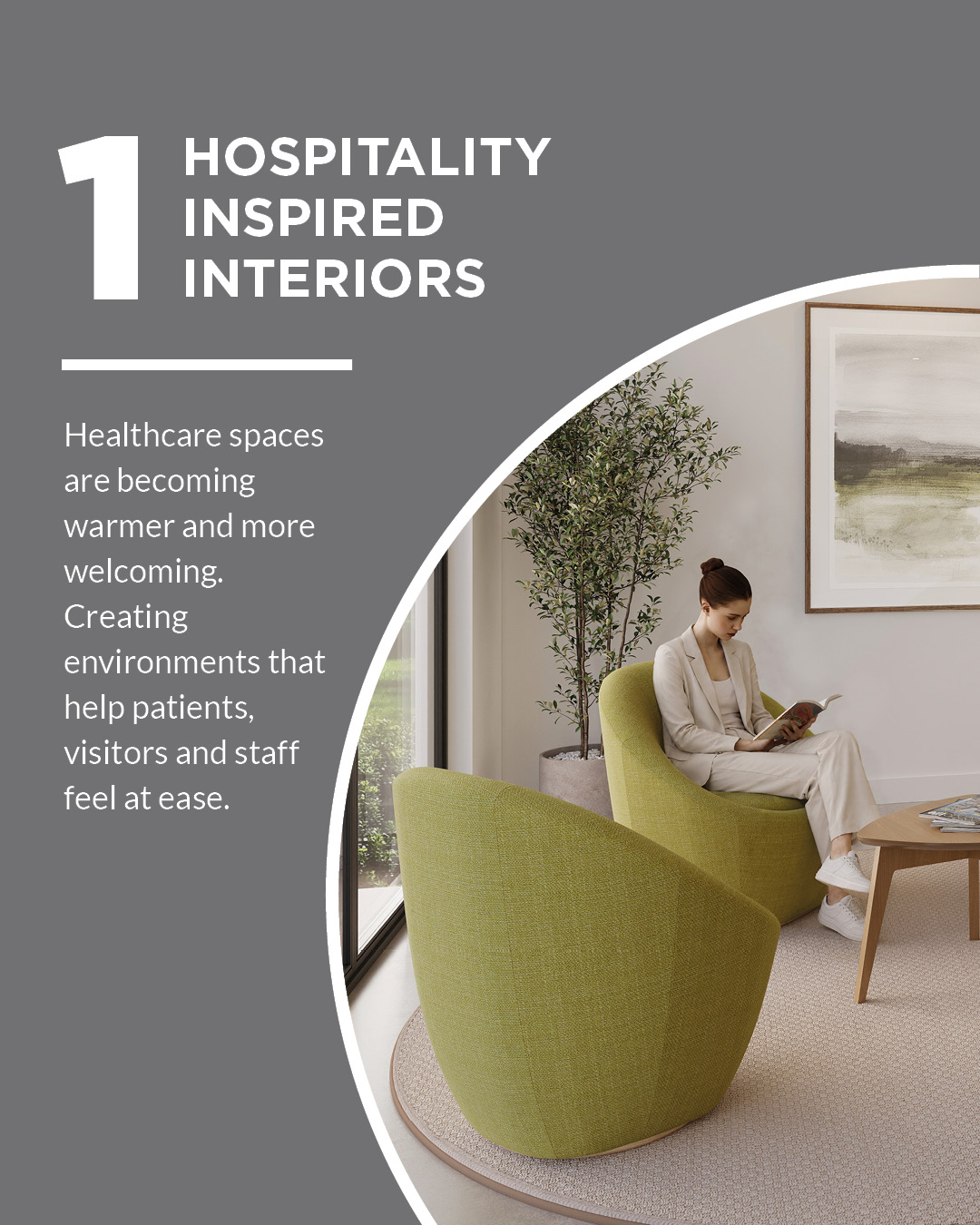
1. Hospitality-inspired environments that feel calm and welcoming
Healthcare spaces are becoming warmer, calmer and more welcoming, with designers increasingly taking inspiration from hospitality and residential interiors.
Soft colours, natural finishes, comfortable seating and considered layouts can help reduce the clinical feel of an environment and create spaces where patients, visitors and staff feel more at ease. This is particularly important in waiting areas, mental health settings, senior living environments and long-term care facilities, where people may spend extended periods of time.
While safety, durability and hygiene remain essential, healthcare furniture is increasingly being designed to balance these requirements with comfort and visual appeal.
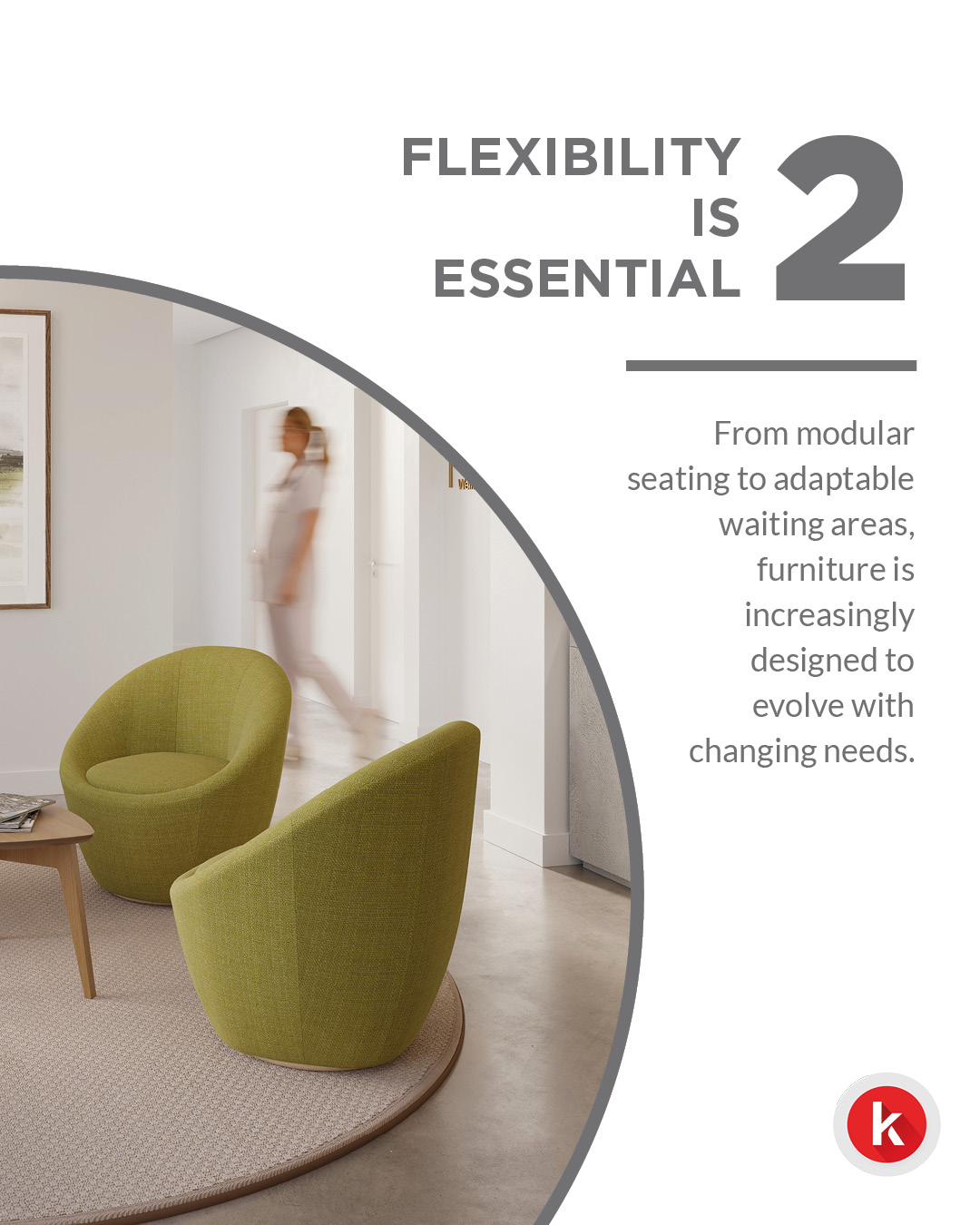
2. Flexible furniture that adapts to changing clinical needs
Healthcare environments need to respond to changing demands, whether that means accommodating different group sizes, creating temporary consultation areas or adapting spaces for new services.
From modular seating and movable tables to flexible waiting areas, furniture is increasingly designed to evolve alongside the needs of a space. Modular furniture can be reconfigured as required, allowing healthcare providers to make better use of available floor space without the need for significant refurbishment.
This flexibility can be especially valuable in busy clinical settings, where spaces often need to support multiple activities throughout the day.
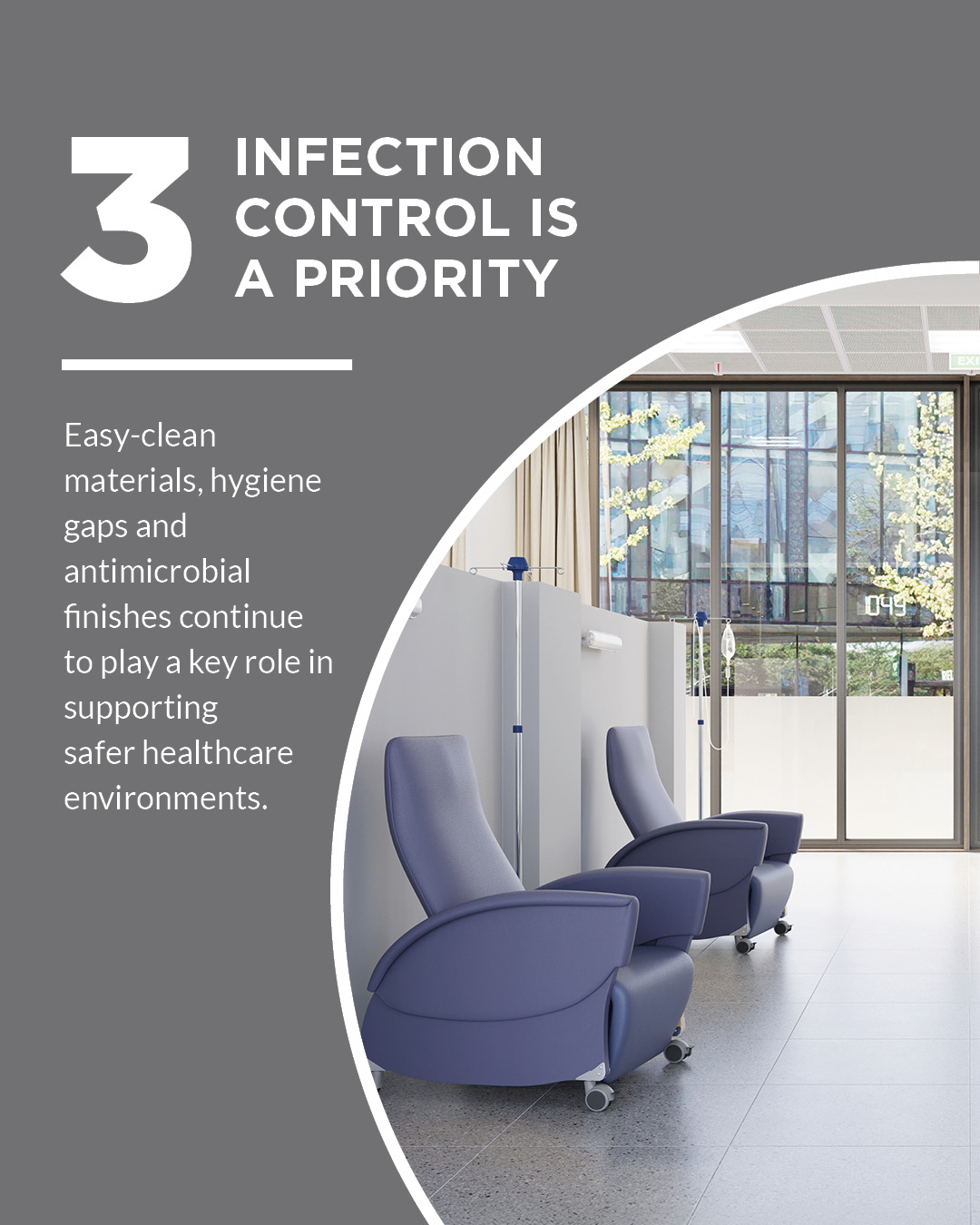
3. Hygiene-focused design with easy-clean, durable materials
Infection prevention remains a key consideration when specifying furniture for healthcare environments.
Easy-clean surfaces, hygiene gaps, sealed upholstery, minimal seams and antimicrobial finishes can all help support more effective cleaning routines. Furniture must also be able to withstand regular cleaning with specialist products without compromising its appearance or performance.
Durability is equally important. Healthcare furniture is often used continuously and must be capable of performing reliably in demanding environments. Selecting robust materials and finishes can help extend the lifespan of a product while reducing the need for frequent repairs or replacements.
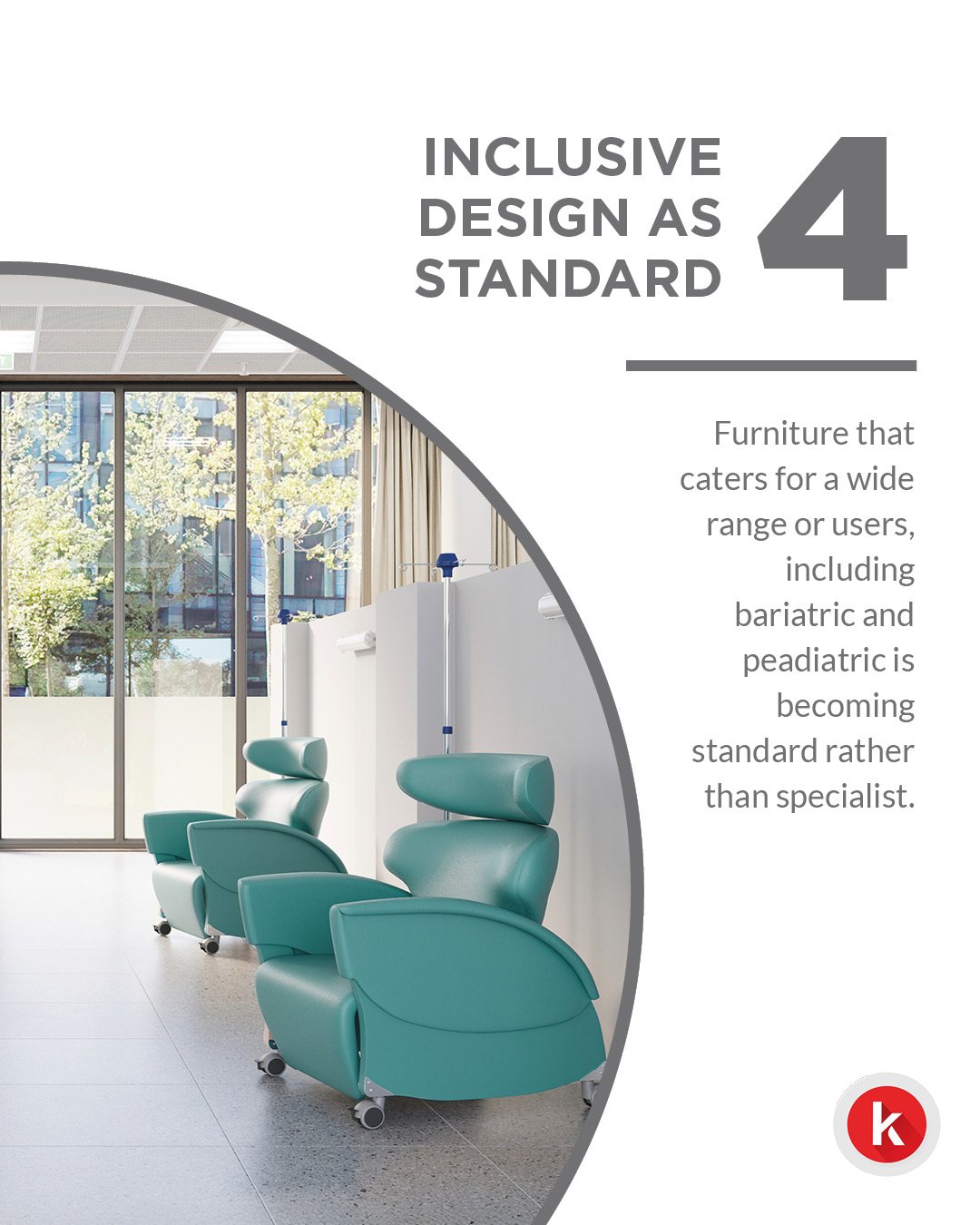
4. Inclusive seating that supports users of all ages and abilities
Inclusive design is becoming a standard consideration rather than a specialist requirement.
Healthcare spaces are used by people with a wide range of physical, sensory and mobility needs. Seating should therefore offer a variety of seat heights, widths and support levels to help users sit down and stand up more comfortably.
This can include bariatric seating, paediatric furniture, high-back chairs, seats with supportive arms and options suitable for older users or people with reduced mobility. Providing a considered mix of seating helps ensure that more people can use a space comfortably and independently.
Inclusive design also extends beyond physical accessibility. Colour, contrast, layout and sensory considerations can all help create environments that are easier to navigate and less overwhelming.
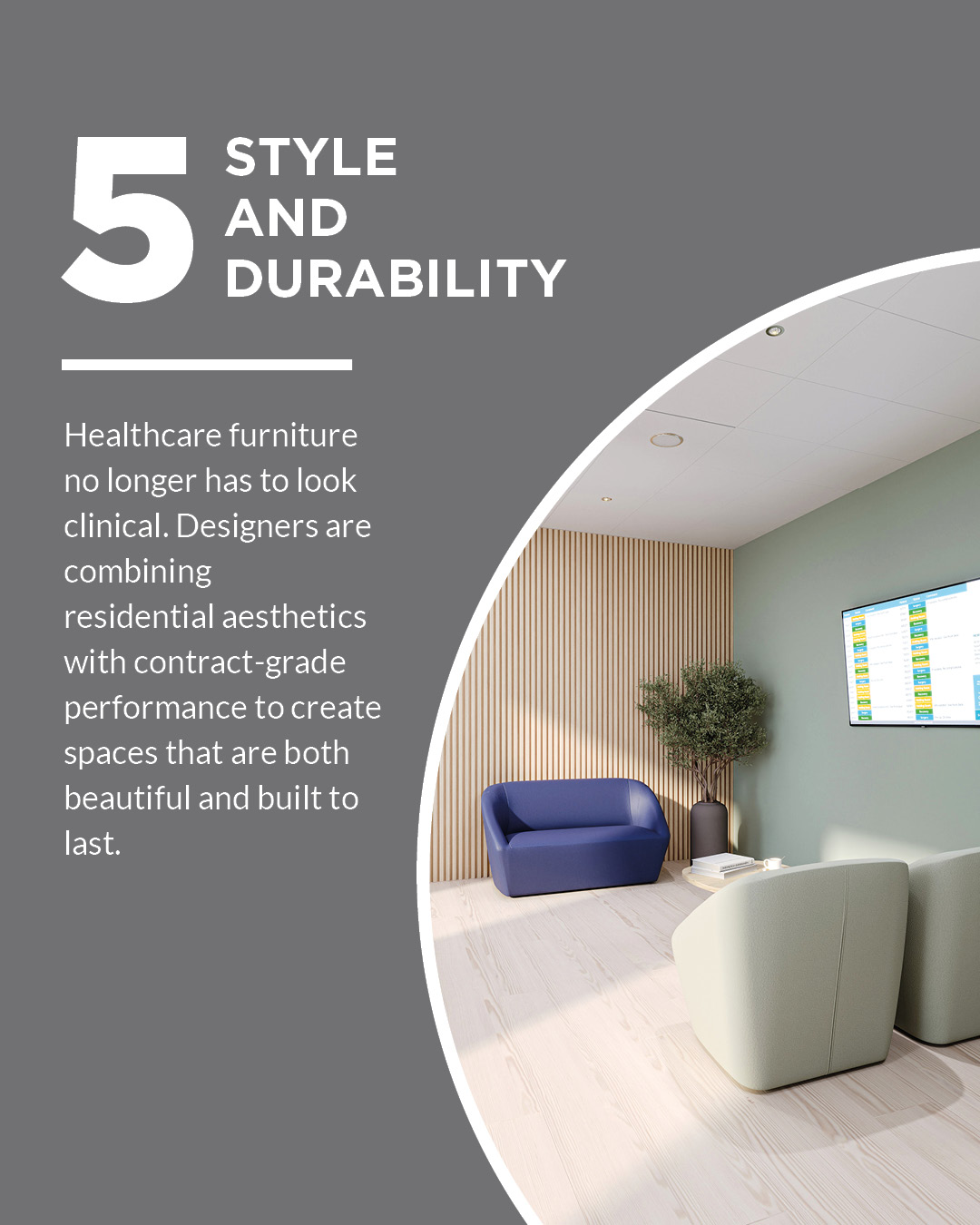
5. Residential aesthetics combined with contract-grade performance
Healthcare furniture no longer has to look clinical.
Designers are increasingly combining residential aesthetics with the strength, safety and durability required in contract environments. Softer forms, textured fabrics, timber-effect finishes and carefully selected colour palettes can help create a more familiar and reassuring atmosphere.
However, these products must still meet the practical demands of healthcare settings. Furniture needs to be easy to maintain, highly durable and suitable for intensive use, while also meeting the relevant safety and performance requirements.
The result is furniture that feels comfortable and familiar while remaining built to withstand the realities of a busy healthcare environment.
Looking ahead
As expectations continue to evolve across the NHS, mental health settings, senior living and wider care environments, thoughtful furniture design has an increasingly important role to play.
By balancing comfort, flexibility, hygiene, accessibility and durability, healthcare providers can create spaces that better support patients, visitors and staff. Furniture is no longer simply a functional requirement; it is an important part of creating environments that feel safer, calmer and more human.

Comments are closed here.